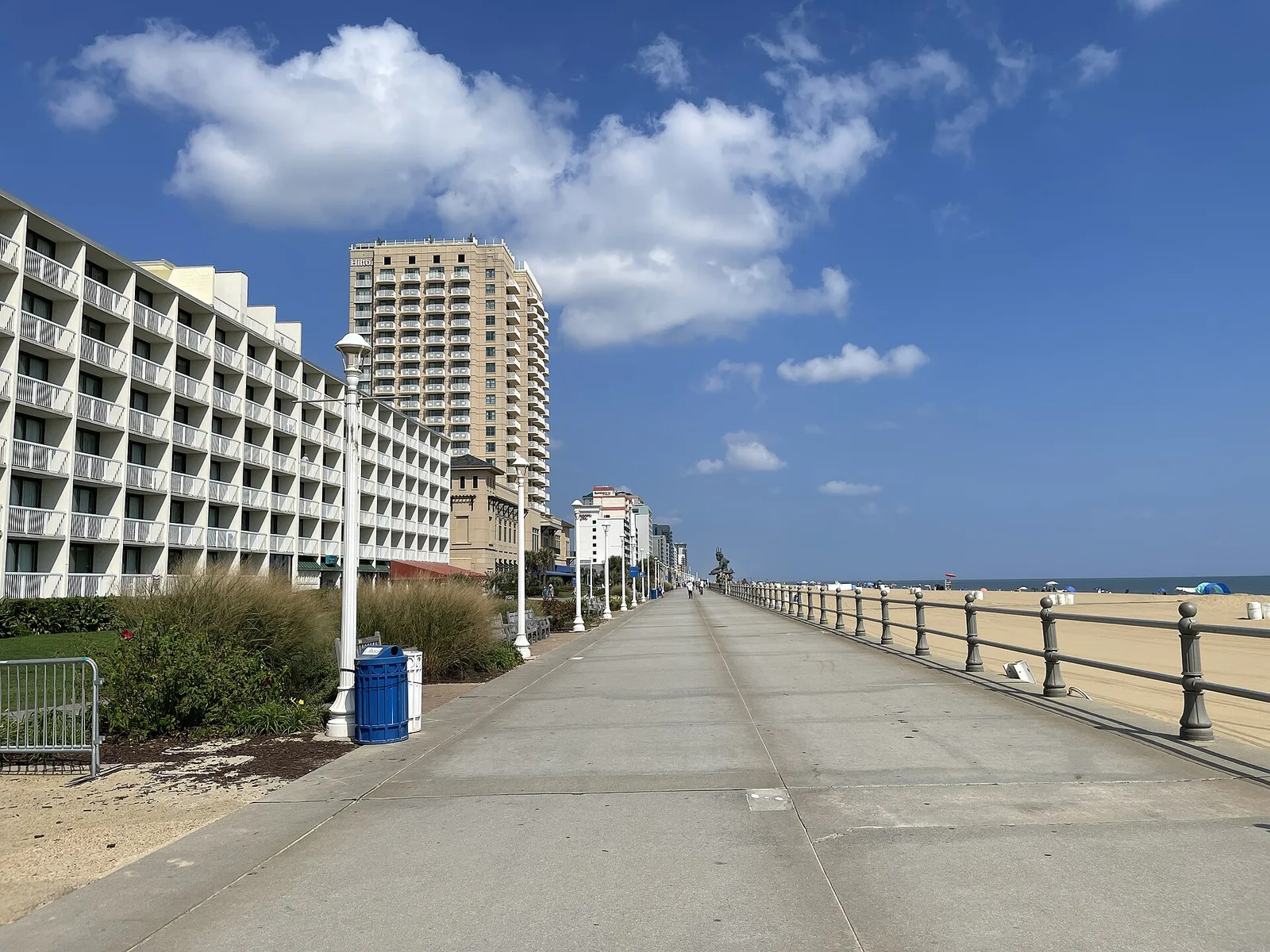
The mayor's Task Force for a Safer Virginia Beach wants open-street weekends on Atlantic Avenue and a youth curfew kept. Its 27 ideas went to City Council on Tuesday.
The Mayor’s Task Force for a Safer Virginia Beach has finished its work with 27 recommendations for City Council. They range from turning parts of Atlantic Avenue into a pedestrian mall on spring weekends to asking the General Assembly for new powers over pop-up gatherings.
The recommendations were the first briefing on City Council’s agenda for Tuesday, Nov. 10, at 2:30 p.m., presented by Deputy City Manager Monica Croskey. A briefing is not a vote. Council takes no action on the list at a briefing.
The city’s task force page says the group “developed 27 recommendations that offer pathways to ensure Virginia Beach remains a community and destination of choice.” The page links the list as the task force’s final report.
Who drew them up
Mayor Bobby Dyer assembled the task force to “develop recommendations to ensure our community remains a safe place for our residents and a desired tourist destination for our visitors,” according to the city. It is an advisory group. It has no power to change city policy itself.
State Sen. Christie New Craig and Del. Michael Feggans co-chaired it. Its 19 members included:
- Police Chief Paul Neudigate
- Commonwealth’s Attorney Colin Stolle
- a chief deputy from the Virginia Beach Sheriff’s Office
- the heads of the Virginia Beach Hotel Association, the Virginia Beach Restaurant Association and the Atlantic Avenue Association
- leaders from Virginia Beach City Public Schools, the Boys & Girls Clubs of Southeast Virginia and the city’s Human Rights Commission
The full roster is on the city’s page.
The group met six times between July 6 and Oct. 29 at City Hall and the Voter Registrar’s Office. At its first meeting, Croskey showed members a video about recent “teen take-overs.” She said the task force was meant to prevent and mitigate such incidents. Residents gave their views at three listening sessions in late July and through an online survey.
How the list was cut to 27
Members rated 54 possible recommendations in an online survey after their Sept. 28 meeting. Items that scored at least 40% went forward. That left 27, according to the summary of the final meeting on Oct. 29.
The summary notes it “may not reflect final wording.” Members could send edits to Croskey until Nov. 3. They also talked about merging some items, so the version council saw may group them differently.
The Oceanfront in spring
Twelve of the 27 deal with the resort area during the spring season.
Running the space differently
- On each Friday and Saturday in spring, temporarily turn parts of Atlantic Avenue into a pedestrian mall, with entertainment programmed by Beach Events
- Set up rideshare pick-up and drop-off zones, as airports and stadiums do
- Set or refine hours for the city’s open spaces and parks at the Oceanfront
The summary notes the Atlantic Avenue open-streets idea has been proposed before, by the Atlantic Avenue Commission, “but has not yet materialized.”
How the area looks
- Move forward with Atlantic Avenue improvements to infrastructure and the pedestrian experience
- Tougher business property standards: cleaner storefronts, secured vacant buildings and better lighting in parking lots
- Keep and expand the city’s commercial facade grants
Members asked for consistent enforcement. They said some businesses are cited for small faults while others are left in poor condition.
Safety partnerships
- Partner with violence interrupters across the city
- Work with organizers of pop-up gatherings to turn them into structured events
- Enforce alcohol overserving laws at bars and clubs more consistently, and hold businesses accountable for patron behavior tied to nightlife incidents
Neudigate told members a pilot program bringing non-police professionals to the Oceanfront to help de-escalate was being considered. He also said he would like a state ABC agent embedded in the Police Department, the summary records.
Image and communications
- A communications strategy to counter what the task force called “disproportionate negative media coverage of the Oceanfront”
- Educate the public on the city’s values, for example with welcome videos in hotels
- Use the city’s existing apps, which members suggested combining into one app for residents and visitors
Across the city
The other 15 recommendations reach beyond the Oceanfront.
Legislation and policy
- Lobby for HB 778 or a successor bill on pop-up gatherings. It would include the power to set no-gun zones near entertainment districts and to recover costs from pop-up organizers. The earlier bill failed in the last General Assembly session, an earlier task force summary records. Members said they prefer the term “community safety zones.”
- Keep the citywide curfew for unaccompanied minors
- Review the law on police use of drones. Stolle told members state law allows drones for crowd control at official special events but not at unofficial ones.
Mental health
- Ask the General Assembly to fund a Virginia Beach pilot of an integrated mental health model, with more access to professionals and more bed space
- Have the Police Department use special conservators of the peace for custody and transport under temporary detention and emergency custody orders, freeing sworn officers. Neudigate said this is already in progress.
- Expand mobile crisis teams and non-police health care responses
At the Sept. 28 meeting, the task force put the share of police patrol time spent on mental health calls at about 11%, according to that meeting’s summary.
Youth, jobs and getting around
- Apprenticeships and career training for young people, with medical and EMT training mentioned
- Youth transportation and microtransit so young people can reach jobs and programs
- Youth-focused digital platforms to spread the word about programs and events
- Local social media influencers to promote positive events and perceptions of Virginia Beach
- A citywide microtransit strategy
Other measures
- A public education campaign on safe gun storage, including state tax incentives and the gun lock programs run by the Police Department and the Sheriff’s Office
- Better street lighting, with members suggesting smart lights at the Oceanfront that can be brightened when needed
- Starting police salaries that compete with the rest of the region
- Agreements among agencies to track when people are connected to help such as housing or mental health services
What it means for you
Nothing changes yet. Each recommendation needs action by City Council, a city department or the General Assembly before it takes effect.
Several items need state law, including the no-gun zones, cost recovery from pop-up organizers, wider drone use and state money for a mental health pilot. Council heard a briefing on its 2027 draft legislative agenda at 3:30 p.m. the same afternoon. That agenda is the city’s list of requests to the General Assembly.
To tell council members what you think, use the contacts on the city’s City Council page or speak during public comment at a formal session. For other city contacts, see our guide to who to call at City Hall. For what is planned on the Oceanfront, see our Oceanfront and boardwalk guide.
We will update this story when the city publishes the briefing slides or council acts on any of the recommendations.
Have your say